

The Start of the School Year in Different Countries: Umbrellas in India, and Hiking in Poland
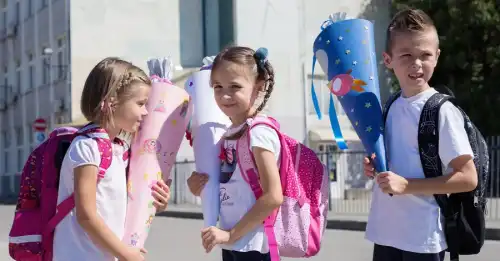
Photo: namensetiketten.de Subscribe to us on Google Add Now
Late August is the time when parents worldwide pull out school supply lists, buy backpacks, and choose outfits for the first day of school. And this first day of school looks different in various countries, not always falling on September 1st. Consequently, preparations are also unique.
Some places have a standard “assembly,” others a collective outing into nature, and some even pretend it’s a regular, unremarkable day. The correspondent of Korotko pro explored the peculiarities of the start of the school year in different countries.
Germany: A Huge Cone of Sweets for First-Graders
For a German child entering first grade, there’s a special symbol of starting school life – the Schultüte, or “school cone.” This is a large cardboard cone that parents fill with sweets, stationery, small gifts, and pleasant trinkets. The tradition is nearly 200 years old and is common throughout Germany.
The size of the Schultüte can be quite substantial – some are almost as tall as the first-grader themselves. For teenagers moving to the next grade, this ceremony doesn’t exist; the Schultüte is exclusively for those just beginning their school journey.
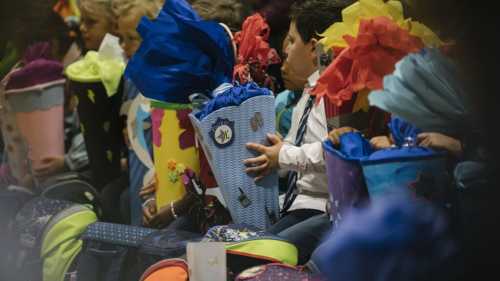
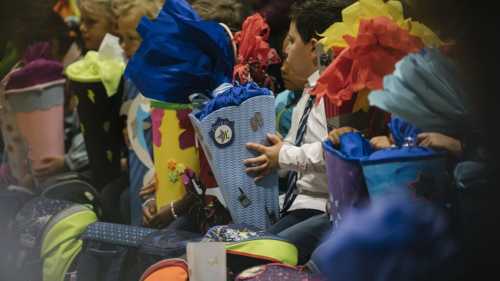
In Germany, children receive a large cardboard cone filled with sweets, stationery, and small gifts. Photo: br.de
Japan: The New School Year Arrives with the Sakura
While most European countries see children return to school in late summer, Japan’s academic year kicks off on April 1st, around the time the sakura (cherry blossoms) bloom across the country.
The school entrance ceremony is called nyūgakushiki. For the Japanese, it’s a significant event: newcomers, accompanied by their parents, arrive in smart attire and take their seats in the school hall, where senior students welcome the juniors.
The start of studies is particularly symbolic for first-graders. After the official proceedings, parents photograph their children at the school and against the backdrop of blooming sakura trees. In Japanese culture, the beginning of the school year is perceived as a new chapter in life.
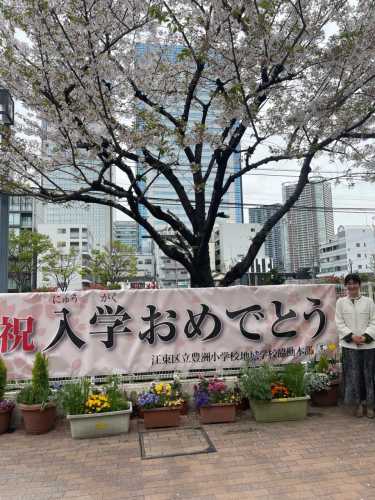
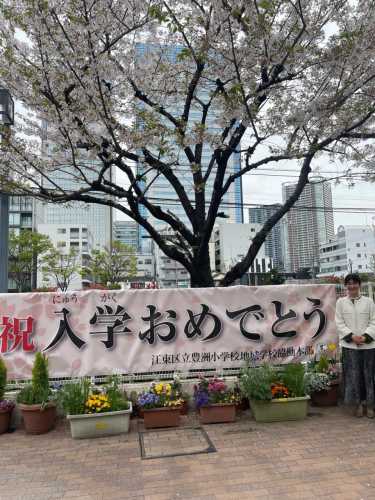
In Japan, children are welcomed under blooming sakura trees. Photo: note.com/suzukiayako
Poland: Trips for the New Class
In Poland, the tradition of going on short trips is linked to class integration. This is especially relevant for middle and high school classes, where a group might include many teenagers who haven’t known each other previously.
Sometimes, to unite the class, schools organize so-called integration trips. The class, accompanied by teachers, goes out of town for several days, where, instead of regular lessons, excursions, games, and team-building activities take place. Students might go kayaking, on a cycling tour, a guided excursion, or participate in an outdoor game. Some of these trips last several days.
Thus, in some schools, before making teenagers sit together at desks, they are offered a chance to get acquainted in a less formal setting. However, these trips are not a mandatory nationwide ritual; the format depends on the specific school.
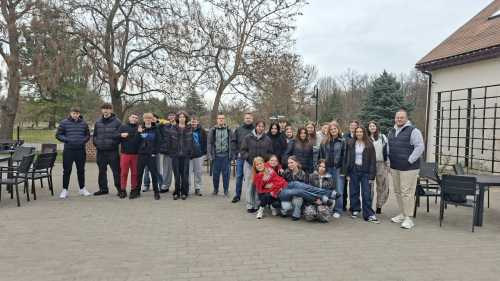
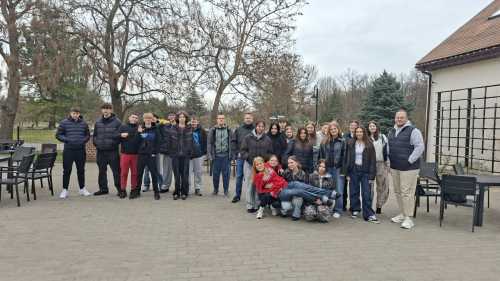
In Poland, a new class often embarks on an integration trip. Photo: zsgh.edu.pl
France: The School Start – a Heavy Backpack
The French rentrée scolaire, or “return to school,” is an event in the country around which an entire preparation system is built. Special attention is given to school supplies. The French Ministry of Education publishes approximate lists of necessary items.
When compiling the lists, they suggest considering the cost of purchases for the family, the weight of the backpack, and the possibility of reusing or recycling items. Schools are also advised to coordinate the requirements of different teachers and, if possible, organize group purchases so that this start is not too expensive for the family, and the backpack is not too heavy.
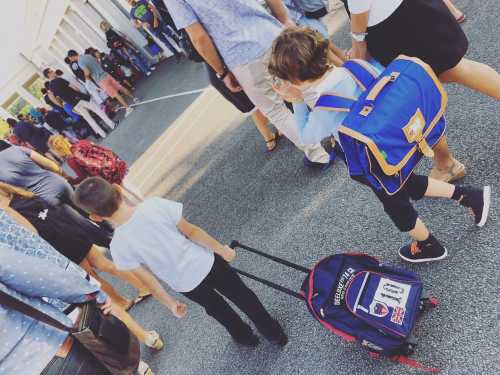
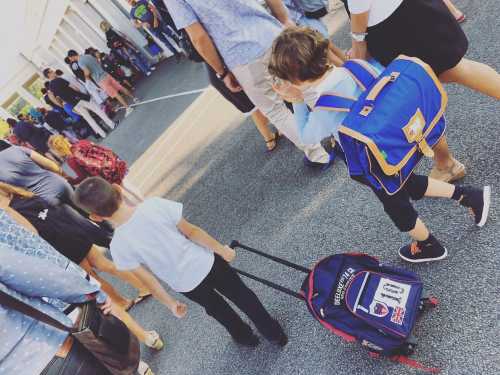
In France, the state ensures that a student’s backpack is not excessively heavy. Photo: blog.francearoundme.com
Denmark: Children are Greeted with Flags and Songs
In Denmark, the school year has already begun, starting in August. The first day of school is considered an important transition event from preschool childhood to school life. For children attending school for the first time, the first day of learning is quite solemn: they are greeted with Danish flags, ceremonial speeches, and songs. Parents lead their first-graders by the hand as they enter the school as a family.
On one hand, there’s national symbolism and an official ceremony; on the other, a family atmosphere.

In Denmark, the start of the school year is both a national and family celebration. Photo: facebook.com/skjernfolkeskole
India: In Some Regions, Students Receive Umbrellas
In India, the beginning of the new academic year is a distinct celebratory event. For instance, in the state of Karnataka, special festivals mark the start of the school year – Prarambhotsava. Children are congratulated, textbooks are distributed, and receptions are held for students.
In certain regions, including Mumbai, children are given school supplies, sweets, umbrellas, and raincoats at the start of the academic year: in many parts of India, the commencement of studies coincides with the monsoon season.

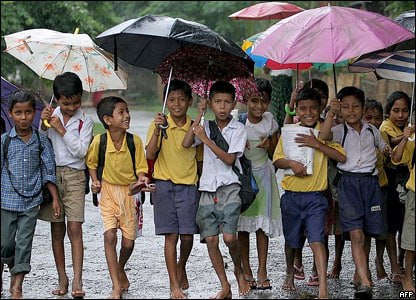
In some regions of India, children receive umbrellas because the first day of knowledge coincides with the rainy season. Photo: hindustantimes.com
Sweden: No Mandatory “September First”
The academic year in Sweden begins in mid-August; the exact date is determined independently by each municipality. The first day of school (skolstart) in this country is drastically different from Eastern European traditions: there are no elaborate assemblies, school uniforms, strict suits, or mandatory bouquets for teachers.
Everything is conducted as informally and routinely as possible, aimed at reducing stress for children. Essentially, the school simply returns to life after the holidays, without a mandatory ceremony.
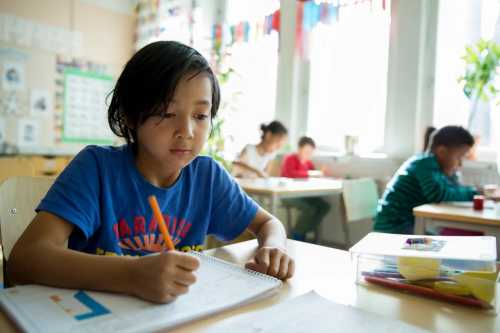
In Sweden, the school year begins as informally as possible to avoid unnecessary stress for children. Photo: sweden.se
South Korea: The First Day of School – a Family Event
The first day of school in South Korean schools starts on March 2nd or the first Monday of March. Full-fledged lessons are not conducted on this day. The main event is a solemn assembly. The academic year itself is divided into two semesters and begins in spring, not autumn.
In South Korea, the start of the academic year is also accompanied by ceremonies welcoming new students. Parents come with their children, take photos by the school gates, and the ceremony itself becomes an important family occasion. Students get acquainted with teachers and the school, while parents strive to capture this day in photographs.
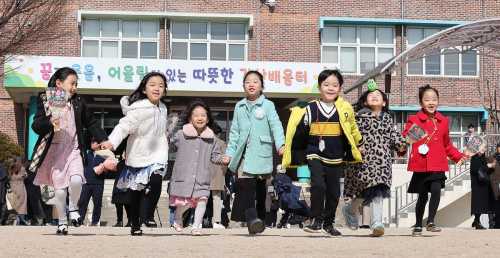
In South Korea, the academic year begins in March. Photo: korea.net
Джерело: kp.ua