

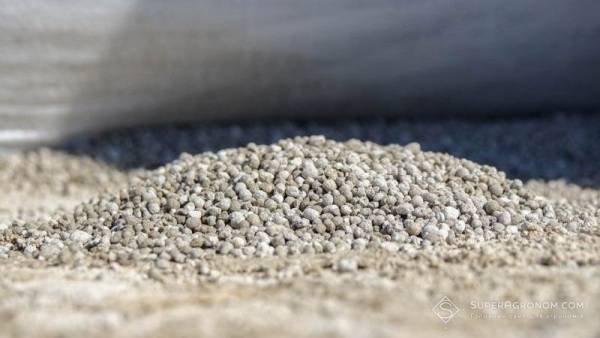
Photo: SuperAgronom.com
The global nitrogen fertilizer market is attempting to stabilize. The primary center of influence has shifted from the Persian Gulf to China, and the Black Sea has become a trap for not only Russian but also Georgian nitrate.
In contrast, in Ukraine, despite all global market growth trends, nitrogen fertilizers are showing a price weakening, writes Infоindustria.
Urea
Global prices for granular urea maintained an upward trend at the end of August, supported by activity in North Africa. In Egypt, producers Mopco and Abu Qir sold volumes at $490/t FOB, reflecting a $15 increase compared to the previous week. In Algeria, quotations strengthened to $521/t FOB for prompt shipments. Simultaneously, the American market reacted to the rally in corn prices, causing urea prices to rise to $418/st FOB (per short ton), which, in turn, stimulated an increase in indicators in Brazil to the level of $450/t CFR.
China remains a key factor of uncertainty. Despite the adjustment of the export price threshold to $322.20/t FOB, the market is filled with rumors about the issuance of a third export quota of up to 2 million tons, which does not fit within the government’s price limit of $350/t FOB and indicates significant pressure from Chinese supply in the region, moreover, it contrasts with the general global trend.
Ammonia
A sharp correction was recorded in the ammonia market west of Suez. The September contract in Tampa decreased by $80 to $555/t CFR, marking the fourth consecutive monthly decline from the peak level of $825/t in May. This large-scale adjustment is primarily due to reduced ammonia offtake by phosphate enterprises Mosaic, rather than a general change in market balance, as prices in Northwestern Europe show greater resilience.
East of Suez, the price corridor in India has stabilized within the range of $450–460/t CFR, which is currently considered a potential market “bottom.” However, the European nitrogen fertilizer sector is under critical pressure due to high TTF gas prices (€65–68/MWh). This makes domestic ammonia production in Europe economically unviable due to negative margins, forcing producers to reorient towards imported raw materials.
Ammonium Nitrate (AN/CAN)
The ammonium nitrate market in the Baltics remains stable, with quotations holding in the range of $340–360/t FOB. Limited supply for September shipments supports sellers’ confidence. Russian product was valued by buyers at $330/t FOB Baltic for large batch deliveries (around 40 thousand tons) to Brazil, but producers are so far restrained in concessions.
In the UK, expectations of further price increases dominate: CF Industries maintains its price at £460 per ton (delivered farm). This differs significantly from the situation in Ukraine, where, according to monitoring data, domestic nitrate prices continue to decline, showing negative dynamics contrary to European expectations.
Georgian nitrate, which was oriented towards the EU for the entire past year, faced CBAM restrictions. In fact, this almost stopped supplies from Georgia; RustaviAzot exported 52 thousand tons of nitrate to Peru and 59 thousand tons to Ukraine over 7 months, with only 4 thousand tons going to Romania.
Ammonium Sulfate (AS)
The Chinese market for CPL grade ammonium sulfate showed recovery to $180–195/t FOB. The activity of major players like Shandong Luxi and Fujian SCC resumed after its $194/t FOB, setting a clear price benchmark for the region.
In Brazil, spot prices rose to $225–240/t CFR due to increased purchases during the ANDA congress. However, the strategic forecast indicates the first annual demand decrease in the country in 9 years. The main factor is China’s export policy, which significantly limits product availability on the global market in the second half of 2026.
UAN (Urea Ammonium Nitrate)
The French UAN market is showing strengthening: prices for UAN-30 have risen to €420–435/t FCA. The situation in the Baltics remains stable. Although netbacks are estimated in the range of $290–310/t FOB, the official market benchmark remains the index indicator of $422–504/t FOB, which has not undergone significant changes over the reporting week.
An important logistical event was the resumption of exports from China after the March ban. On August 20, a batch of 48,537 tons was dispatched from the port of Lianyungang to Australia (port of Kwinana). This is the first significant UAN shipment from the PRC in the last five months, made possible after the lifting of export barriers at the end of July.
Also read: There is no fertilizer deficit in Ukraine: an analyst spoke about the situation before sowing

Main topic
Autumn sowing 2027

Olena Basanets, SuperAgronom.com
Be the first to learn about the latest agronomic news from Ukraine on our Facebook page, Telegram, and subscribe to SuperAgronom’s Instagram.