

“>
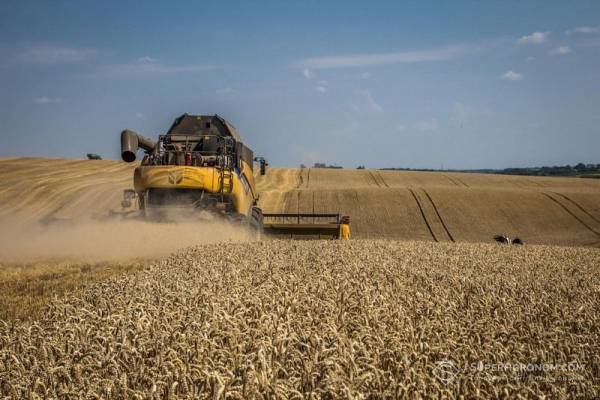
Photo: SuperAgronom.com Harvesting wheat
This year’s harvest campaign is unfolding amidst unpredictable weather conditions: regions have been intermittently hit by rains, followed by a wave of heat. However, despite the weather, agrarians report that the early crops cultivated this year are demonstrating excellent quality and yield, as reported by Elevatorist.com.
Discussions with some of our sources about grain quality took place before the heatwave, just as the wheat harvesting season was gaining momentum. At that time, rains were affecting various regions, necessitating grain drying even in the eastern areas, where wheat is typically harvested with standard moisture content.
“Moisture is present, and this is not surprising. Furthermore, excessive moisture, requiring either ventilation or drying, is observed not just in one region but across many,” stated Serhii Shcherban, Head of the Storage Department at Kernel company.
His observations are corroborated by Dmytro Dobroshtan, Director of NOVAAGRO APK LLC.
“Due to rainfall during the harvest, grain is being delivered with moisture levels primarily ranging from 16% to 17%, and occasionally reaching 18%,” the director commented.
Regarding the proportion of food-grade versus feed-grade grain, there is a significant quantity of second and third-class grain this year. This observation was made by representatives from NOVAAGRO, VITAGRO, Kernel, and Volyn-Zerno-Product companies. Dmytro Dobroshtan elaborated that in the Kharkiv region, the ratio of food-grade grain (classes 2-3) to feed-grade grain is approximately 60% to 40%. Kernel noted that food-grade grain constitutes a substantial portion of the total harvested crop.
In the Odesa region, wheat was harvested with high yields and quality indicators of the second class: moisture content was 8-9%, and foreign matter was less than 1%. This was shared by Anatolii Dyetochka, Director of Golden Agro company. He highlighted that the yield reached nearly 10 tons per hectare, whereas typically, harvests were around 6 tons per hectare, with a maximum of 7-8 tons per hectare.
A more somber assessment of the wheat harvest came from Ihor Zablotskyi, Head of Dobronadiivske HPP at AgroVista company. He evaluated the harvest in his region, Kirovohrad Oblast, noting that the wheat delivered had low hectoliter weight, which consequently lowers its class.
“The contractual standard for hectoliter weight is 760 g/l, yet the wheat was coming in with a hectoliter weight of 650 g/l. With each rainfall, the quality deteriorates: the falling number decreases, and germination accelerates. As a result, wheat that was borderline third class becomes fourth class, and fourth-class grain is downgraded to feed grade,” these drawbacks were pointed out by Ihor Zablotskyi following the initial phase of the harvest.
At Urozhai Agricultural Firm, operating in the Sumy region, they report that the quality and yield of early grains in the region are lower compared to last year.
“Grain delivered by depositors is predominantly fourth-class wheat. Our own grain is mostly third class, but with a weak hectoliter weight indicator,” explained Volodymyr Shevchenko, Deputy Chairman of the Board at Urozhai Agricultural Firm.


Olena Basanets, SuperAgronom.com
Be the first to get the latest agronomic news from Ukraine on our Facebook page, Telegram channel, and subscribe to SuperAgronom’s Instagram.