
The Cost of Heat for Europe: 180 Billion Euros in Losses and a “Melted” Economy
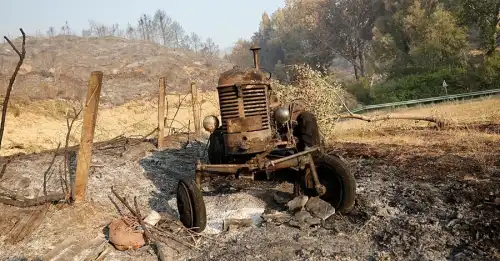
Photo: OSCAR DEL POZO/AFP via Getty Images Subscribe to us on Google, add now
While a significant portion of Europe’s population is suffering from the heatwave, some economists are already concerned about the cost of another exceptionally hot summer for the European economy. In brief – hot days are affecting everyone without exception and are proving very expensive.
The Netherlands Has Already Counted
Let’s be clear from the outset: there is no precise figure yet, and it’s unlikely to be available in the near future. The calculation needs to encompass various aspects – from crop losses and reduced productivity in businesses to direct material damage (e.g., from heat-induced fires) and losses incurred by insurance companies, who reluctantly but eventually cover the consequences of heatwaves.
The Dutch bank Triodos has attempted to estimate the approximate losses, with the caveat that Europe continues to burn, and the figure will undoubtedly change in a month. As of August 10th, the bank stated that the European Union’s GDP had decreased by approximately 1% due to extreme heat and drought – amounting to about 180 billion euros.
Heatwaves generate substantial economic losses that often don’t resemble typical disasters. If no building is destroyed, an insurance company might not have to pay out anything. However, a shop loses customers, a restaurant loses revenue, a factory loses productivity, a farmer loses crops, and a carrier loses money.
Heatwave Hits Restaurants, Tourism, and Agriculture
Reuters cites data on the situation in Padua, Italy: over 80% of food service businesses surveyed by the agency reported a drop in turnover of around 20% during the recent heatwaves. Even the daily economy of cities is changing: people are staying indoors in the evenings, spending less time in cafes and restaurants, and consumer activity is declining.
Simultaneously, agriculture is suffering: climate-related damages have already cost the Italian agricultural sector around 20 billion euros in the last four years. This year, the situation is expected to be even worse due to the combination of heat, drought, and water scarcity.
In the UK, the effects are particularly noticeable in agriculture. According to The Guardian, the current heat and drought threaten grain production to such an extent that one of the worst harvests in over 40 years is predicted, with potential revenue losses for producers estimated at around 390 million pounds sterling.
Animal husbandry is also affected: poor grass growth reduces fodder reserves, and the heat decreases milk yields. Adding to the surreal situation are some berries and stone fruits that, surprisingly, are handling the current season quite well. Vineyards, in particular, promise a good harvest.
For Germany, one of the main economic impacts of the current heatwave is linked not directly to the thermometer but to water. Due to the drought, the water level of the Rhine – one of Europe’s most crucial transport arteries – has dropped sharply. Ships are forced to reduce their cargo, increasing transportation costs. Industrial supply chains are also disrupted, which is particularly felt by the chemical and heavy industries in the Rhine basin. Factories can operate, but transporting raw materials or finished products becomes significantly more expensive.
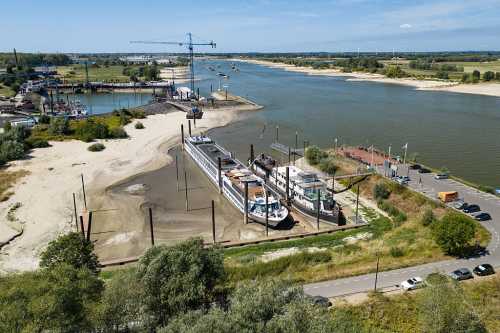
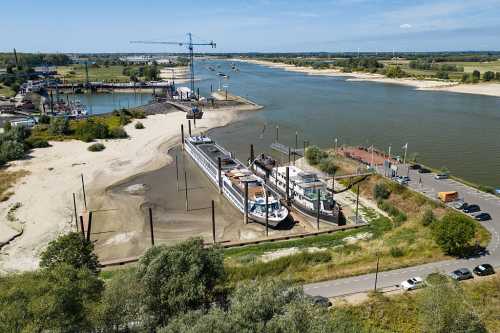
Navigable Rhine has dried up. Photo: Oliver Berg.
Most Affected Countries
In France, the heatwave is simultaneously impacting agriculture, energy, and GDP. According to the Copernicus portal, this past June was the hottest June on record for Western Europe.
Triodos estimates that France could lose about 1.4 percentage points of its GDP due to the climate shock. The main blow has been to the energy sector: the heat and low water levels prevent nuclear power plant units from cooling properly, posing a significant risk of reduced electricity production. Simultaneously, demand for electricity is increasing due to air conditioning, and the French are currently unsure how to escape this vicious cycle.
Spain is experiencing extreme heat, drought, and large-scale wildfires concurrently. According to The Guardian, fire has damaged around 275,000 hectares of the country’s territory this year. Triodos estimates that extreme heat could reduce Spain’s economic growth by almost one percentage point.
However, a paradox can be observed here: despite the extreme situation, tourists continue to visit the country, currently supporting the rapidly declining Spanish economy. No one can say how long this tourist anomaly will last or how quickly the European South will cease to be a comfortable holiday destination.
The situation is particularly dire in countries where agriculture plays a significant role – primarily Central and Eastern Europe. In the Netherlands, potato farms are suffering; in Bosnia, the heat is severely reducing corn yields; in the Czech Republic, hop producers are facing problems, which could even affect the brewing industry.
In Romania and Hungary, the reduction in water resources simultaneously threatens crops and livestock. The low level of the Danube further complicates grain transportation. This means Europe is losing money not just due to the heat but also due to the unpleasant combination of “heat + drought.”
Not Showing Up for Work or Dying from the Heat
The most underestimated cost of heat-related disasters is human lives.
One can start with the fact that at extreme air temperatures, a person can fall ill or get injured. This involves healthcare systems, insurance companies, and potential lawsuits for work-related injuries. These are expenses.
Sometimes, an employee simply works slower, takes more frequent breaks, shifts work to the morning or evening, or doesn’t come to work at all. This is how productivity begins to decline in construction, agriculture, transportation, logistics, industry, and delivery services.
If one wishes to calculate the healthcare system’s expenses for treating the consequences of heatwaves, they are not yet available for this year, but past years have already been tallied. France spent about 25.5 billion euros between 2015 and 2019, according to experts from the Organisation for Economic Co-operation and Development. This includes costs for emergency room visits and hospitalizations related to heatwaves (23.2 billion euros). Added to this are 23.2 billion euros in payments for premature deaths, 2.3 billion euros for lost activity and productivity, and 31 million euros for actual medical care.
France is a telling example; in other European countries, losses and expenses for aiding people are also calculated in millions and billions of euros.
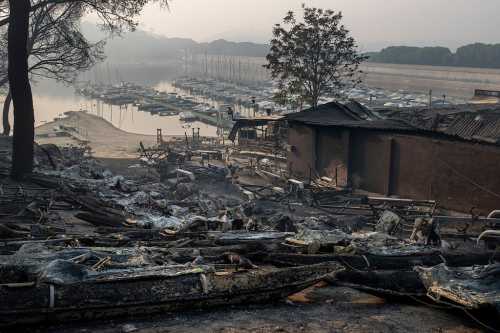
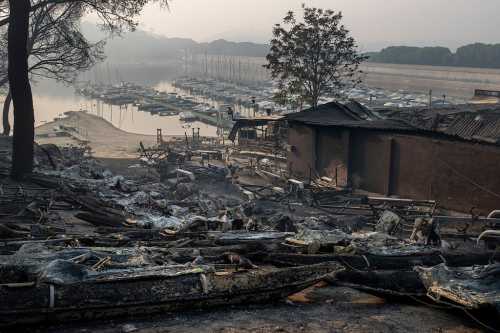
No one knows how many years it will take to restore the burnt-out resorts. Photo: Brais Lorenzo/Bloomberg via Getty Images
Fires Show No Sign of Stopping
Let’s add a pinch of economics to the “human” cost. Due to the consequences of the heatwave, inflation is rising, as poor harvests mean less product supply. Simultaneously, costs for electricity for cooling, water, insurance, logistics, and medical care are increasing.
We’ll count the fires separately. Today, major fires are raging in France, Greece, Belgium, Spain, Portugal, Croatia, and other countries. In Belgium, a fire destroyed about 3,000 hectares of a nature reserve; in Croatia, up to 40 people were injured and 1,200 evacuated due to a fire in a tourist area.
However, the final calculation for fires will be far greater than the value of the burnt forest. It will include evacuations, compensation, loss of tourism revenue, infrastructure restoration, the work of firefighters, aircraft, and rescuers, as well as the long-term loss of ecosystem services.
This means Europe is beginning to pay for heatwaves not only with human lives but also with its economic growth rate. And the potentially lost 180 billion euros do not represent the cost of burnt houses or perished crops, but rather economic losses that may never be offset by future profits.
Джерело: kp.ua