

>
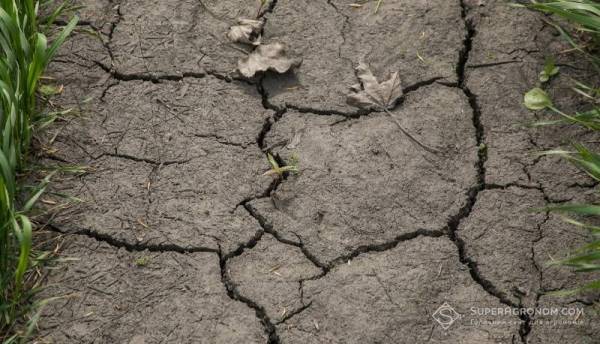
Photo: SuperAgronom.com
The water flow rate in Ukrainian rivers could decrease by 25% or more if the pace of global warming does not slow down, and the southern and eastern regions of the country will be most affected by water scarcity.
Meteorologist, Doctor of Geographical Sciences, Head of the Department of Atmospheric Physics at the Ukrainian Hydrometeorological Institute of the State Emergency Service of Ukraine and the National Academy of Sciences of Ukraine, Vitaliy Shpyg, spoke about why Ukraine is already facing the preconditions for a water crisis, how the destruction of the Kakhovka Reservoir has affected the situation in the south, and which regions risk being left without sufficient water supply.
“Ukraine already has the prerequisites for a water resource deficit related to climate change. This is most acute in the South of the country: due to the disappearance of the Kakhovka Reservoir, destroyed by Russian aggressors, serious problems with even ordinary water supply have arisen there – this is a serious challenge for local authorities, which will have to be resolved at the state level. One option is the restoration of the Kakhovka Reservoir after the war, another is the large-scale construction of pipelines from other large reservoirs to the southern regions,” the meteorologist noted.
According to Vitaliy Shpyg, the water deficit itself is linked to rapid warming, which leads to increased evaporation. The rate of increase in average temperature in Ukraine is among the highest in Europe, a region that, due to its geographical location, already shows some of the highest indicators globally.
Prolonged heatwaves also cause intensive evaporation of moisture from the soil, drying up lakes, and lowering reservoir levels. This problem did not arise in the 2020s but back in the early 2010s, perhaps even earlier.
The scientist emphasizes that the water deficit is also related to changes in precipitation patterns: traditional moderate rains are being replaced by short-term downpours followed by prolonged dry periods. During such downpours, water does not have time to saturate the soil and replenish underground aquifers – it simply flows away, causing flooding.
Another manifestation of the deficit is the drying up of small streams and the disappearance of small rivers, which is observed not only in the south but also in the north of the country. It is small rivers that feed large water arteries; their mass silting and drying up threaten a decrease in water flow in Ukraine by 25% or more.
Vitaliy Shpyg notes that the South and East of Ukraine may suffer most from water scarcity: Odesa, Mykolaiv, Kherson, and Zaporizhzhia regions are already in the risk zone. With further temperature increases, they could move from the risk zone to a zone of critically low water supply.
“Agriculture is the most vulnerable to water scarcity: limited irrigation capabilities threaten crop yield reductions and will require the urgent creation of land reclamation systems, as well as an accelerated search for drought-resistant crop varieties – a process that is difficult to implement in a short time due to the duration of selection,” he says.
Read also: Drought: how plants protect themselves and how an agronomist can help

Olena Basanets, SuperAgronom.com
Be the first to get the latest agronomic news from Ukraine on our Facebook page, Telegram, and subscribe to SuperAgronom’s Instagram.